
If you are an international medical graduate (IMG) planning to enter residency or pursue another medical pathway in Canada, you may encounter the National Assessment Collaboration (NAC) Examination.
But there are two different questions that are often confused: Are you eligible to take the NAC Examination? and are you eligible to practise medicine in Canada?
They are not the same. The NAC Examination assesses readiness for supervised postgraduate medical training. Medical licensure is determined separately by provincial and territorial medical regulatory authorities and depends on the pathway you pursue.
Who Is the NAC Examination For?
The Medical Council of Canada (MCC) describes the NAC Examination as a national clinical examination that assesses the readiness of international medical graduates to enter Canadian residency training.
For IMGs applying to Canadian residency through the Canadian Resident Matching Service (CaRMS), the NAC Examination is part of the examination pathway. The NAC may also be used as a screening requirement by some provincial Practice-Ready Assessment (PRA) programs.
For an overview of the examination itself, see our complete NAC OSCE exam guide.
Who Can Apply for the NAC Examination?
Eligibility is tied to your medical education and documentation. In general, international medical graduates and eligible international medical students must have graduated from, or be progressing toward an acceptable medical degree from, a medical school that meets the MCC’s requirements.
For international medical schools, candidates should confirm that their school is listed in the World Directory of Medical Schools and has the appropriate Canada Sponsor Note where required for MCC services.
Because document and eligibility requirements can change, use the official MCC NAC Examination information and your physiciansapply.ca account to confirm your individual eligibility before applying.
Can International Medical Students Take the NAC Examination?
Eligible international medical students may be able to apply before receiving their final medical diploma, provided they satisfy the MCC’s current student requirements and submit the required documentation.
The MCC uses a Student Attestation Form for international medical students and students from U.S. schools of osteopathic medicine where applicable. The form is completed by the medical school’s dean or registrar and confirms the student’s expected completion of the requirements for the medical degree.
If you are still a student, do not assume that enrollment alone is sufficient. Check the current application window and documentation requirements before planning an examination session.
Does Your Medical School Need to Be Recognized?
Yes. Your medical education must meet the MCC’s acceptability requirements. For graduates of international medical schools, the school’s World Directory listing and Canada Sponsor Note are important parts of determining whether the degree is acceptable for MCC services.
This should be checked early. Discovering a credential problem after building a residency application plan can create significant delays.
Do You Need a physiciansapply.ca Account?
The MCC uses physiciansapply.ca for services such as medical credential verification, examination applications, viewing exam results and sharing documents with participating organizations.
IMGs should create their account early enough to complete the documentation and source-verification steps relevant to their pathway.
Do You Need to Pass the MCCQE Before Taking the NAC?
Do not rely on older guidance stating that the MCCQE must always be completed before the NAC Examination. For IMGs preparing for the CaRMS R-1 match, current MCC guidance allows candidates who need both results to take the NAC Examination and MCCQE in the order they prefer.
Your broader residency application still has its own examination and eligibility deadlines, so the best order depends on your timeline.
For MCCQE preparation information, see our MCCQE exam guide.
Is the NAC Examination Required for CaRMS?
The MCC states that IMGs must take the NAC Examination to apply to Canadian residency through CaRMS. However, passing an examination does not by itself make an applicant eligible for every residency position.
CaRMS eligibility can involve additional criteria such as citizenship or immigration status, medical-school requirements, examination results, language requirements and province- or program-specific rules.
Always check the requirements for the specific match, province and residency program you intend to apply to.
Does Passing the NAC Let You Practise Medicine in Canada?
No. Passing the NAC Examination is not a medical licence.
Canada’s provinces and territories regulate medical practice through their respective medical regulatory authorities. The requirements for registration differ by jurisdiction and by pathway.
An IMG may pursue routes such as:
- Canadian residency through CaRMS;
- a Practice-Ready Assessment program, if eligible;
- an approved-jurisdiction pathway;
- a specialty Practice Eligibility Route; or
- other provincial pathways available for their training and experience.
The examinations and credentials required can differ between these routes.
NAC Eligibility vs Medical Licensure Eligibility
This distinction is particularly important when searching for “NAC exam eligibility for medical practice in Canada.”
NAC eligibility answers whether you meet the requirements to apply for and take the examination.
Licensure eligibility answers whether you meet the requirements of a provincial or territorial medical regulator to receive a particular form of medical registration.
The NAC can be one component of a pathway, but it does not replace postgraduate training, certification, provincial registration or other requirements that may apply.
What About Practice-Ready Assessment?
Practice-Ready Assessment programs are generally designed for eligible internationally trained physicians who have already completed postgraduate training and have relevant independent practice experience.
The MCC notes that the NAC Examination can be used as a screening tool for some provincial PRA programs. However, each program establishes its own eligibility criteria.
That means you should not take the NAC solely because you assume every PRA program requires it. First identify the province and PRA program that fits your qualifications, then check its current requirements.
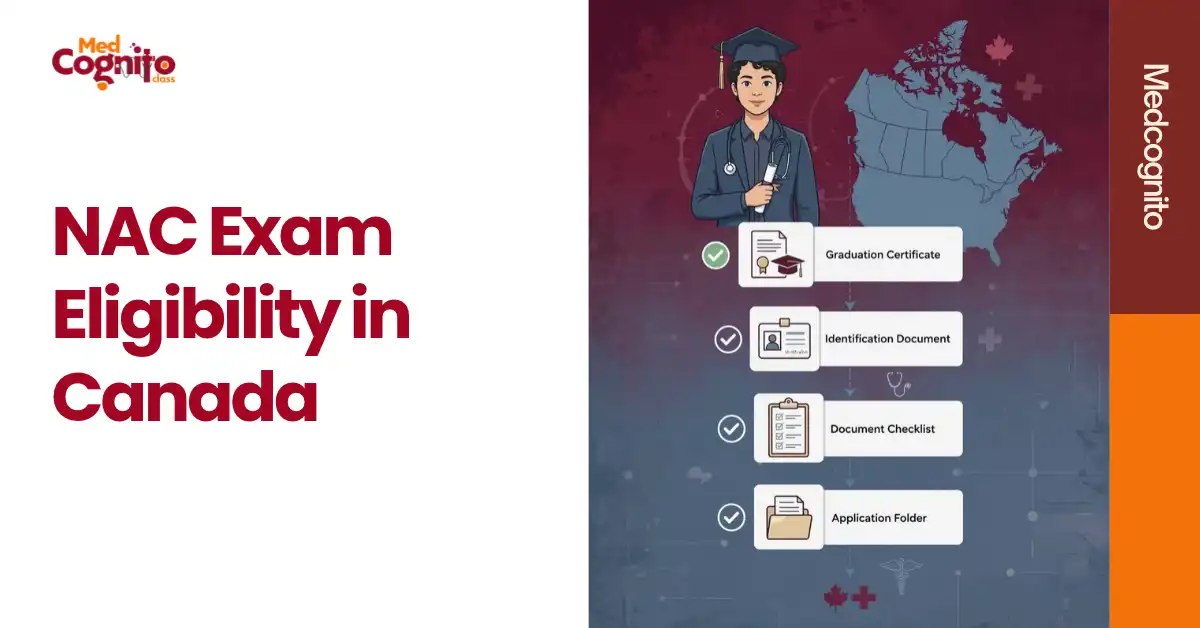
What Documents Should IMGs Prepare?
The exact documentation depends on your status and pathway, but candidates commonly need to prepare and maintain:
- acceptable identity documents;
- medical-school and degree information;
- source verification of relevant medical credentials where required;
- student attestation documentation if applying as an eligible student; and
- other documents requested through physiciansapply.ca or by the relevant residency or licensing authority.
Start document preparation early. Credential verification and corrections can take time.
How to Check Your NAC Eligibility
- Confirm your medical school and degree are acceptable. Check the applicable MCC requirements and World Directory information.
- Create or review your physiciansapply.ca account. Make sure your identity and credential information is current.
- Determine whether you are applying as a student or graduate. The required documentation can differ.
- Review the current NAC application requirements. Do not rely on an old article or previous examination cycle.
- Check the requirements of your intended pathway. CaRMS, PRA programs and provincial regulators may have additional eligibility rules.
What Happens After You Confirm Eligibility?
If the NAC is required for your pathway and you are eligible to apply, the next step is to plan your examination and preparation timeline.
Our NAC OSCE preparation guide explains how to build your clinical practice strategy, while our guide on how long to study for the NAC OSCE compares practical preparation timelines.
If you want structured support, MedCognito’s NAC OSCE Prep Course is also available.
Frequently Asked Questions
Can an IMG take the NAC Examination?
Yes, eligible international medical graduates can apply for the NAC Examination if their medical education and documentation satisfy the MCC’s current requirements.
Can a medical student take the NAC Examination?
Eligible international medical students may apply if they satisfy the MCC’s current student requirements and provide the required attestation and other documentation.
Do I need to pass the MCCQE before the NAC?
Not necessarily. Current MCC guidance for IMGs who need both examinations for the CaRMS R-1 match allows the MCCQE and NAC Examination to be taken in the order the candidate prefers.
Is the NAC required for Canadian residency?
The MCC states that IMGs must take the NAC Examination to apply to Canadian residency through CaRMS. Individual match and program eligibility requirements still apply.
Does passing the NAC mean I can work as a doctor in Canada?
No. Passing the NAC does not grant a medical licence. Medical registration is controlled by provincial and territorial medical regulatory authorities, and requirements vary by pathway and jurisdiction.
Is the NAC required for every Practice-Ready Assessment program?
No universal rule should be assumed. The NAC is used as a screening tool by some PRA programs, but each provincial program sets its own eligibility requirements.
Final Takeaway
NAC exam eligibility is an important step for many IMGs pursuing Canadian residency, but it should not be confused with eligibility for independent medical practice.
Confirm that your medical education and documents meet current MCC requirements, identify the Canadian pathway you intend to pursue, and then check the additional requirements of CaRMS, the relevant PRA program or the provincial medical regulator.
Once you know the NAC is part of your pathway, use our NAC OSCE guide, preparation guide and scoring guide to plan the next stage.